Porcini Identification and Seasonal Calendar
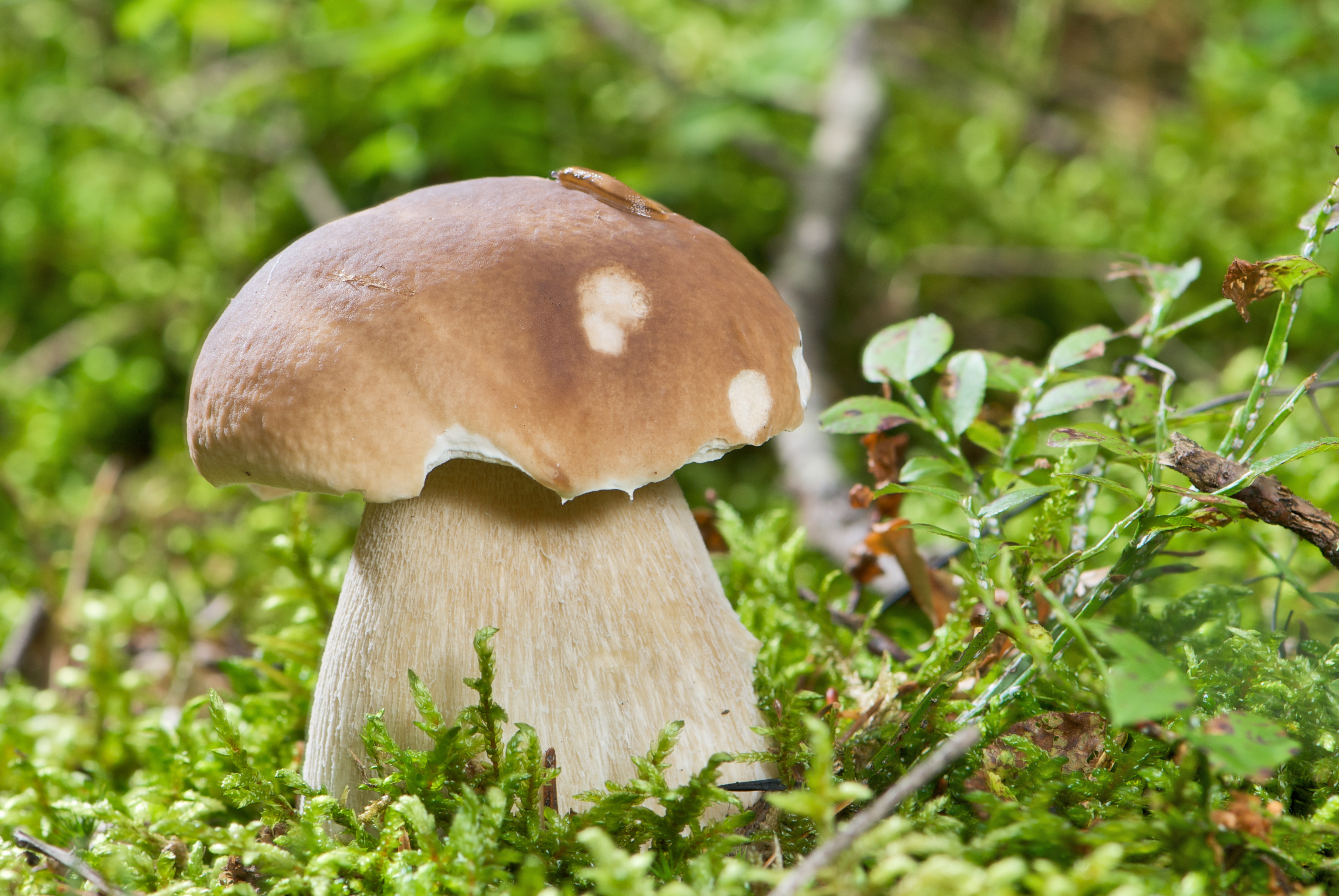
Boletus edulis, the porcino, is the most sought-after edible mushroom in Italy. It grows in loose association with conifers and deciduous trees depending on altitude and region, and its appearance is dictated more by rainfall timing and substrate temperature than by any fixed calendar date. The schedules printed in popular guides — "find porcini in September" — are accurate for some regions and irrelevant for others.
This reference covers the four main Boletus edulis group species found in Italy: B. edulis sensu stricto, B. aereus (the bronze porcino of Mediterranean zones), B. pinophilus (pine forest specialist), and B. reticulatus (summer porcino, often the first of the year). Each behaves differently by altitude and forest type.
Identification Markers
The porcino group shares a consistent morphological profile that distinguishes it from most dangerous lookalikes. The cap surface ranges from pale beige in young specimens to deep brown in mature ones, with a texture described as "suede-like" rather than viscid or glossy. The cap margin remains inrolled for longer than in most boletes.
Cap
Convex to broadly convex, 7–30 cm across at maturity. Colour varies with species: B. edulis is typically pale to mid-brown, B. aereus is darker, almost blackish-brown in dry conditions, B. pinophilus tends toward reddish-brown. The flesh is white, firm, and does not change colour when cut — this is a critical identification point.
Pore surface
White in young specimens, ageing to cream and then yellow-green. The pores are small and uniform. The tube layer detaches cleanly from the cap flesh. No bluing reaction when cut or bruised — this distinguishes porcini from several lookalikes in the Gyroporus and Neoboletus genera.
Stem
Stout, bulbous at the base in young specimens, cylindrical in older ones. White to pale brown with a raised network (reticulum) over at least the upper half. The reticulum is a reliable feature — in B. edulis it covers most of the stem length; in B. aereus it may be faint or restricted to the apex.
Key field test: Cut the base of the stem. White, firm flesh with no colour change and no unpleasant odour confirms the porcino group. Any bluing, reddening, or chemical smell warrants caution.
Altitude and Habitat
In Italy, porcini occupy a wide altitudinal range depending on species and latitude. Understanding which species grows where avoids wasted searches and misidentification.
| Species | Altitude Range | Primary Tree Associates | Soil Preference |
|---|---|---|---|
| B. reticulatus | 200–800 m | Oak, chestnut, hornbeam | Calcareous, well-drained |
| B. aereus | 0–600 m | Holm oak, cork oak, stone pine | Sandy, dry, Mediterranean |
| B. edulis | 500–1,800 m | Spruce, silver fir, beech, pine | Acidic, humus-rich |
| B. pinophilus | 600–2,000 m | Scots pine, mountain pine | Sandy, acidic, high-altitude |
Monthly Calendar by Region
The following windows reflect historical fruiting data across major Italian foraging regions. A wet August followed by cooler September nights consistently produces the strongest autumn flushes. Extended drought delays or prevents fruiting regardless of temperature.
| Region | Spring Window | Autumn Window | Notes |
|---|---|---|---|
| Dolomites (Alto Adige, Belluno) | Late June–July (above 1,400 m) | August–October | Strong B. pinophilus in pine zones; strict provincial permit required |
| Piedmont (Langhe, Cuneo, Biella) | June (chestnut/oak belt) | September–November | The most commercially traded porcini belt; communal woodland access varies by comune |
| Apennines (Liguria, Emilia-Romagna) | May–June (B. reticulatus) | September–October | Mixed beech-fir zone above 900 m produces B. edulis; drier southern slopes yield B. aereus |
| Tuscany (Mugello, Casentino, Amiata) | June (high fir forests) | September–November | Free collection in most Arezzo province communal woodland up to 3 kg/day |
| Calabria (Sila, Aspromonte) | Irregular spring flush | October–December | Late season due to southern latitude; Sila National Park restricts commercial collection |
Lookalikes to Know
Two species account for the majority of porcini-adjacent confusion in Italian woodland: Neoboletus erythropus (formerly Boletus erythropus) and Rubroboletus satanas.
Neoboletus erythropus
Common across beech and fir forests above 700 m. Superficially similar cap shape and size. Distinct features: pores are orange-red rather than white or cream, stem shows red granules without a reticulum, flesh blues instantly and intensely when cut. Mildly toxic raw, edible after prolonged cooking, but best avoided given the confusion risk with other blue-staining boletes.
Rubroboletus satanas
The Satan's bolete. Found mainly on calcareous soils in mixed woodland in central and southern Italy. Pale, greyish-white cap; red-orange pores; stem with red coloration at the base. Flesh blues quickly. Toxic, causing severe gastrointestinal symptoms even after cooking. The pale cap and red pores separate it clearly from porcini when fresh — confusion typically arises with old, faded specimens.
Tylopilus felleus
The bitter bolete. Identical stem reticulum to porcini but with pink-tinged pores in maturity and intensely bitter taste. Non-toxic but inedible. A small taste of the raw flesh immediately identifies it. Common in spruce and fir forests across the Alps.
Regional Notes
Piedmont's hazelnut-chestnut woodland in the Langhe and Monferrato hills produces primarily B. reticulatus from late May onward, a species that tolerates lower altitudes and warmer conditions than B. edulis. Many foragers in this zone collect before the autumn season opens for regulated species, exploiting the early-summer gap when permit systems are less active.
The Val d'Aosta and northern Piedmont high country above 1,600 m runs a largely separate ecosystem centred on B. pinophilus in Arolla pine and Scots pine stands. Fruiting here is unreliable before mid-July and often coincides with the alpine marmot season, which brings additional tourist pressure into the same terrain.
In Tuscany, the Casentino forests (between Arezzo and Florence) cover the most diverse porcini habitat in central Italy — a mix of beech, silver fir, and chestnut at 700–1,200 m with excellent moisture retention. The Foreste Casentinesi National Park boundary matters here: collection inside the park boundary is restricted to residents of adjacent comuni; the extensive surrounding communal woodland operates under standard Tuscany regional rules.
Handling After Harvest
Fresh porcini deteriorate quickly. In field conditions, place caps downward in a basket to allow spore dispersal and avoid bruising. Do not use plastic bags — moisture accumulation accelerates decomposition and maggot activity spreads more rapidly.
At home, trim the stem base and any maggot-affected sections before refrigerating. Fresh porcini last 2–4 days at 4°C. For longer storage, slice and dry at 40–50°C over 8–12 hours; dried porcini retain full flavour for 12 months and reconstitute well in cooking liquids.
For reference on regulations applicable during collection, see the legal frameworks article covering permits and daily limits by region.
External reference: Ministero delle Politiche Agricole publishes periodic updates on nationally regulated fungal collection categories.